Not long ago, a $300 budget meant settling for a small TV with a blurry picture. Now, thanks to better technology, you can get a great 4K smart TV without spending much.
When shopping on a budget, picking the right brand matters most. Looking at TVs in stores or online, you will often see a classic matchup: Hisense vs. Samsung.
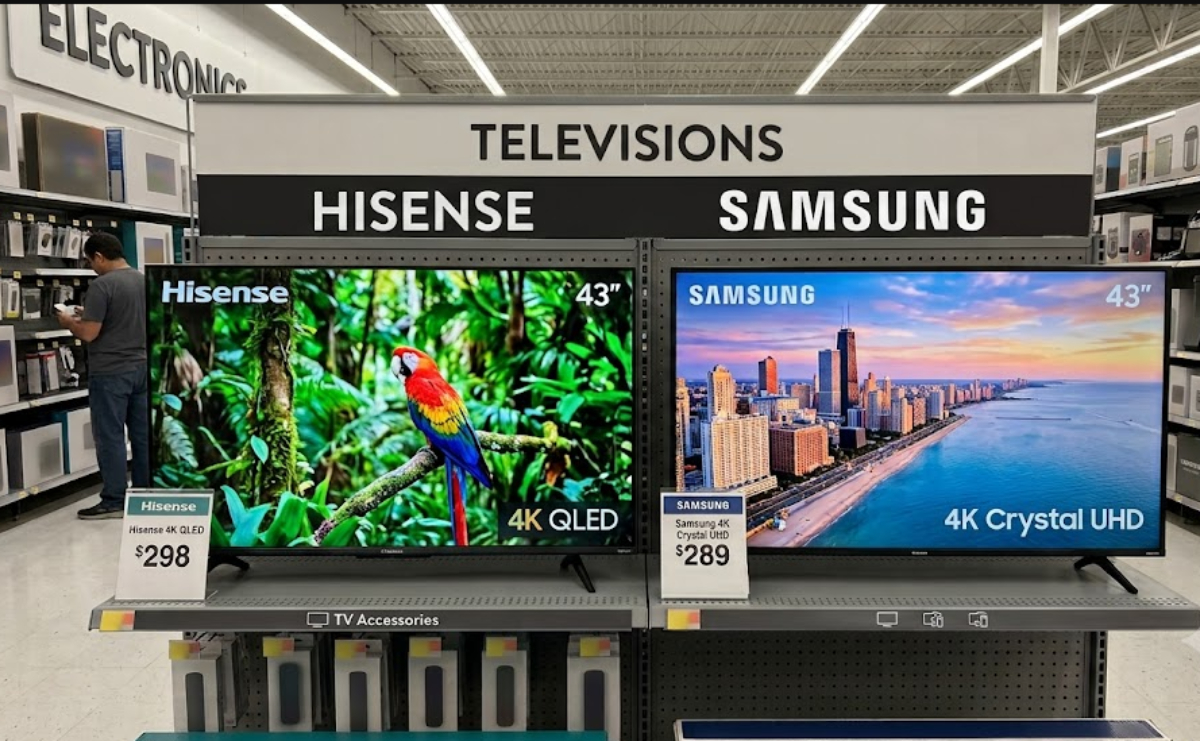
Samsung is a well-known global brand famous for high-end screens. Hisense, on the other hand, has become popular by offering premium features at a lower price.
If your budget is exactly $300, these two brands take very different approaches.
Samsung relies on its strong brand name but removes most advanced features to keep prices low. Hisense packs advanced technology into its entry-level models to stand out.
If you want the best picture quality for your money, the choice is clear. Still, each option comes with its own trade-offs.
1. How Hisense and Samsung compare
If you are buying a high-end TV that costs over a thousand dollars, Samsung is hard to beat. Their screens look great and have powerful processors.
But in the under-$300 range, things are very different.
Samsung sees its budget TVs as basic entry-level products. They use older, less expensive parts, knowing that many people trust the Samsung name.
Samsung’s budget models are part of the Crystal UHD lineup, which uses standard LCD panels and backlighting. These TVs look neat and are usually reliable, but lack the bright, vivid colors of newer displays.
Hisense takes a different approach. Without brand recognition, they focus on offering better hardware for the price.
For about $300, Hisense offers TVs with Quantum Dot technology, also called QLED. This means budget shoppers get picture quality that Samsung usually saves for its pricier models.
2. QLED vs. Crystal UHD
To see why Hisense holds the edge at this price point, you have to look at how these screens actually create an image.
A typical Samsung Crystal UHD TV uses white LED lights shining through a basic color filter. This works, but much light is lost, so the picture can look dim and flat.
If your living room is bright or has large windows, a basic Samsung TV may have trouble handling reflections.
A Hisense QLED TV uses a more advanced layer of tiny crystals called Quantum Dots.
When the backlight shines on these dots, they create bright, accurate colors. This technology lets the TV show over a billion different shades.
Reds look deep and rich, not dull, and greens look lively instead of faded. Most importantly, QLED screens are brighter. The extra brightness reduces glare in bright rooms and makes HD movies look more realistic.
Watching a movie on a Hisense QLED, you will notice clear contrast between dark and bright areas. On a budget, Samsung, those scenes can look gray and dull.
3. Dolby Vision vs. Samsung’s limits
Another big part of picture quality is High Dynamic Range, or HDR. This feature controls how bright or dark different parts of the screen are during a movie. But not all HDR works the same way.
Most streaming services use a top format called Dolby Vision. It sends data to your TV for every frame, adjusting brightness to fit the mood of each scene.
Hisense budget TVs fully support Dolby Vision. When you stream on Netflix, Disney+, or Apple TV, a Hisense TV uses this data to give you the best possible picture.
Samsung does not support Dolby Vision on any of its TVs, from the cheapest to the most expensive. Instead, Samsung uses an open-source format called HDR10+.
HDR10+ works well, but it is less common on major streaming apps. If you play a Dolby Vision movie on a budget Samsung TV, it switches to basic, static HDR.
Without frame-by-frame adjustment, dark horror movies or bright sci-fi films lose much of their detail.
4. Google TV vs. Samsung Tizen
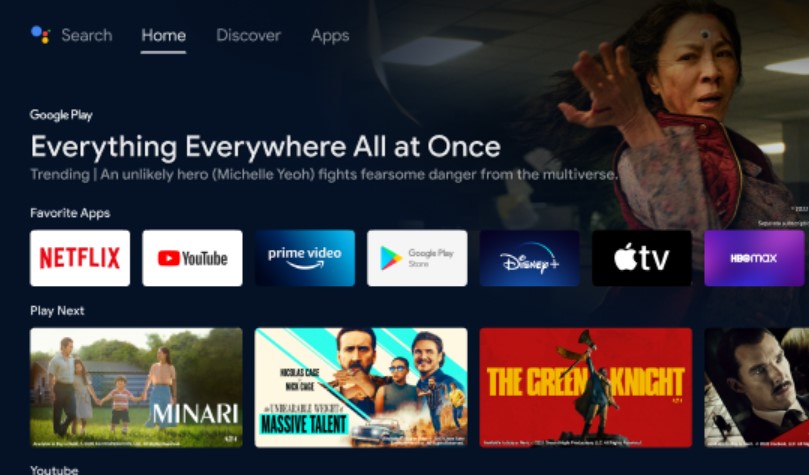
A TV’s software is as important as its hardware. Both brands do well here, but their systems feel very different.
Most budget Hisense TVs use the Google TV platform. Google TV is great because it focuses on your personal viewing habits.
Instead of making you open individual apps like Hulu or Prime Video to find something to watch, the main home screen pulls recommendations from all your services into one place. It also gives you access to thousands of apps on the Google Play Store and has Chromecast built in, making it easy to cast videos directly from your smartphone.
Samsung televisions use their own custom software called Tizen. The Tizen operating system is a major selling point for Samsung because it is fast, simple, and very stable.
The menus are clean, and the TV responds instantly when you press buttons on the remote.
Samsung also includes a free service called Samsung TV Plus, which gives you immediate access to hundreds of live, ad-supported TV channels without needing a cable box or a paid subscription.
If you hate clunky menus and want a smooth, reliable software experience, Samsung has a slight advantage here.
5. Reliability and longevity
While Hisense wins easily in brightness, color, and features, Samsung gains points in long-term reliability and build quality.
Samsung has made millions of TVs over the years, so its quality control is strong. With a budget Samsung TV, you can expect a sturdy case, even lighting, and parts that last for years.
Hisense has made massive strides in reliability. But because they push cheap hardware to maximum brightness, quality control can sometimes be inconsistent.
Some budget Hisense owners notice small issues like software glitches needing a restart or the dirty screen effect, where backlighting looks uneven during sports.
If you buy a Hisense, get it from a store with an easy return policy in case your unit has issues.
Which brand deserves your $300?
With a $300 budget, every TV brand makes compromises. The real question is which ones matter most to you.
If you pick Samsung, you trade some picture quality for a trusted brand, solid build, and smooth software. The TV will work well immediately, but the screen will be dimmer, colors basic, and movies will lack that cinematic wow factor.
If you choose Hisense, you are focusing on a great-looking screen. You get quantum dot colors, strong brightness, and full support for formats like Dolby Vision.
The software may sometimes lag, and the frame might feel less sturdy. Still, the picture quality looks like it belongs on a more expensive TV.
With a $300 budget, your main goal should be to get the best picture quality for your money.
Hisense gives you real QLED panels at this price, while Samsung only has basic edge-lit screens. So, Hisense is the better choice for budget shoppers who want great home entertainment.