The Sharp TV name brings back quality pictures and long use. However, things shifted over time with sales and partners. Now, Sharp sells worldwide, and production looks different.
Below, you’ll learn who makes Sharp TVs today, if the brand holds up, and more details to help you decide.
Are Sharp TVs still sold today?
Yes. This brand continues to sell TVs in many countries. Sizes often range from 32 inches up to 70+ inches or more.
Where they are sold and which exact models appear depend on the region. For instance:
- In the United States, many Sharp TVs run Google TV or Roku TV Operating Systems and are made by Hisense from Mexico.
- In Europe, Asia, and other countries, models have Android TV or other smart systems.
Who makes Sharp TVs today?
Sharp Corporation owns the brand, but Foxconn controls it since the 2016 buyout. Foxconn, a Taiwan giant, runs huge assembly lines for many products. They do not build all Sharp TVs themselves.
Back in 1912, Tokuji Hayakawa started Sharp with mechanical pencils. By 1953, they rolled out Japan’s first mass-made TV. Hits like Aquos LCDs in the 2000s built fame. Money troubles hit hard by 2012.
Foxconn stepped in with a 3.5 billion dollar deal in 2016 for control. This saved jobs but changed focus. Sharp sold off panel plants by 2024, and Japan lines stopped for consumer TVs.
Today, partners handle most consumer models under license deals.
Where are Sharp TVs made?
Manufacturing is spread across these countries to cut costs and taxes:
1. China
China plays a major role for global supply. Foxconn’s vast facilities in Guangzhou and other cities produce Sharp-branded sets under joint ventures.
These plants benefit from economies of scale, churning out millions of units yearly. LCD and QLED panels often originate here.
2. Mexico
In the Americas, these televisions are manufactured or assembled in Mexico.
The advantage is that companies avoid high import taxes and shipping delays for the U.S. and Latin American markets. The factory has been in the hands of Hisense since 2015.
3. Japan
Japan retains limited involvement for specialized products. While consumer TV assembly ceased, plants in the country focus on business displays and prototypes.
High-end Aquos models may incorporate Japanese-engineered tech, but full production shifted overseas by 2024.
4. Other countries
Depending on demand and licensing agreements, some sets are assembled in other regions with local partners. The brand considers small regional factories in Asia, Eastern Europe, and many more when market conditions make it sensible.
Is Sharp a good brand of TV?
This is one of the biggest questions people ask.
In its early days
Sets from this brand were known to have a strong premium build.
They surpassed expectations in terms of quality and durability. In fact, this trademark was once seen alongside premium names like Sony and Panasonic as a leader.
Today’s Sharp TVs
Nowadays, these TVs are made by different partners. This means that quality varies by model and by region.
Some of the screens made by Hisense or other manufacturers offer good picture quality and basic smart TV features at a reasonable price. Others have slower smart systems, less reliable software support, or average performance compared with more expensive brands.
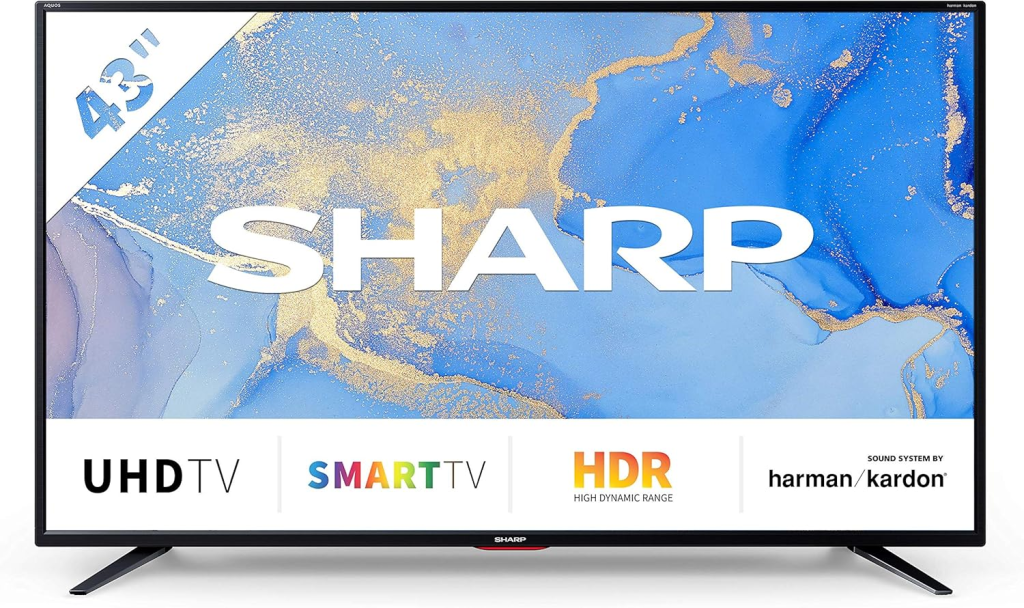
Overall, they have budget models that deliver solid 4K performance at affordable prices, with vibrant colors standing out. You’ll appreciate the Aquos series for easy setup and reliable daily viewing.
How long do Sharp TVs usually last?
There is no exact number for every TV brand, but generally, LED life spans 50,000 hours plus. Also, quality parts and careful engineering tend to make TVs last 6 to 10 years with regular use.
Compared to brands like Sony, Sharp matches mid-tier endurance. Heavy gamers might see quicker wear, but casual viewers find longevity satisfying.