The Skyworth brand comes from China but reaches homes around the world. They pledge sharp pictures at prices that fit tight budgets.
Here are the details on who makes Skyworth TVs, their factories, quality, and much more
Who makes Skyworth TVs?
Skyworth Group Co., Ltd. builds these TVs from ground up. This company started small in Shenzhen back in 1988. Today, Skyworth acts as both maker and designer.
They have their hand in screens, boards, and software. They do not allow any outside firm slaps the name on random gear.
This firm is an OEM and ODM (Original Equipment Manufacturer and Original Design Manufacturer). That means the company can make TVs for its own brand but also build for other trademarks in some regions.
Where are Skyworth TVs made?
Skyworth’s headquarters and largest production sites are in China. Most TVs start as parts made in Chinese factories before being assembled into finished sets.
Large facilities are found in places like Shenzhen, Guangzhou, Wuhan, Qianhai and Ningbo, where panels, screens, circuit boards, and other parts are manufactured. Then these parts are put together into final TV units and shipped to stores or assembly hubs.
Skyworth also operates or partners with factories outside of China to serve local markets:
- In Mexico, a manufacturing site serves Latin American markets.
- In Indonesia, Skyworth runs a production facility (expanded after acquiring a local TV plant).
- In South Africa, Skyworth built a TV assembly factory that handles a high number of units yearly.
- In Poland, Argentina and other regions, Skyworth (or partners) assemble TVs locally, often from parts shipped from China.
What kinds of Skyworth TVs are available?
Skyworth sells many types of TVs for different users, from basic models to advanced display technology. The main varieties include:
1. Smart LED and LCD TVs
Provide clear pictures without extra bells. They are the most common budget and mid-range models that run smart interfaces (like Android TV or Google TV). These are designed for everyday use and streaming services.
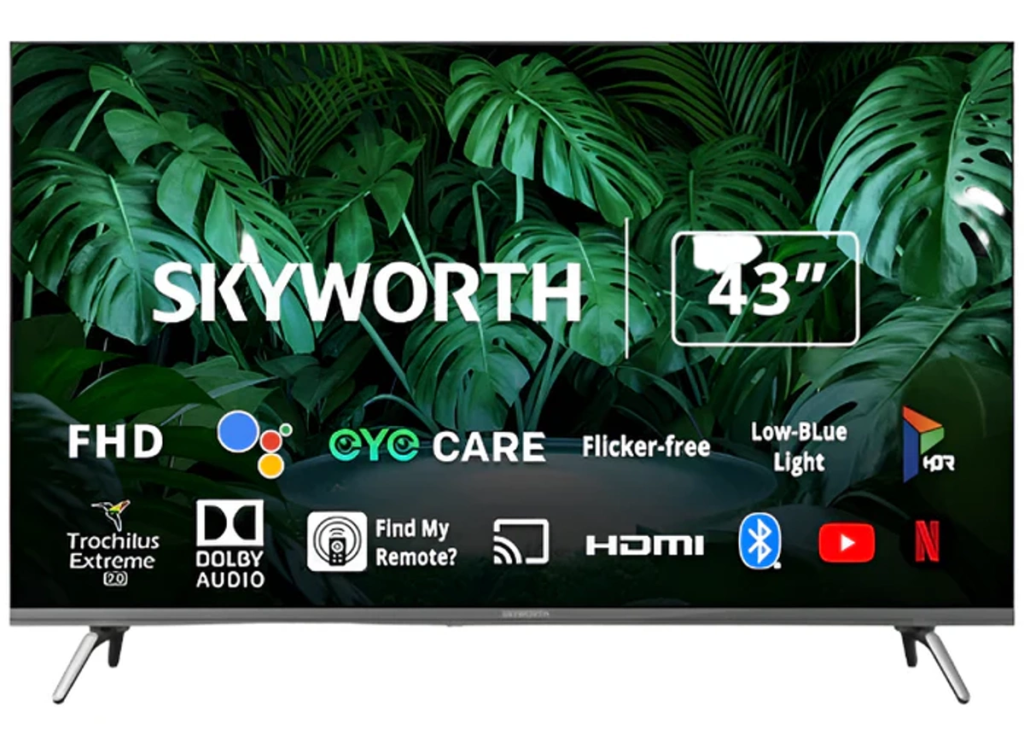
Models like the E6850G in 2K FHD deliver smooth streaming for Netflix and YouTube. They suit kitchens or bedrooms where space stays tight.
2. 4K TVs
These sets have higher resolution and show sharper images with more detail. You notice the jump from HD right away in textures like grass fields or city skylines. Examples here are the SUE7950 series which brings UHD resolution with Google TV built in.
3. QLED and OLED TVs
Skyworth has been expanding into these advanced technologies too. With these, you get deeper blacks than standard LEDs without burn-in worries. OLED versions like the XA8000 series dim pixels individually for true dark rooms.
4. Art and Large Display TVs
These are very big screens (up to 100 inches and more) often used for home cinema setups or special display uses.
Is Skyworth a good brand of TV?
Whether Skyworth is “good” depends on what you want:
- Good for value and features: Skyworth packs QLED screens and 4K into sets under 400 dollars for 55 inches. Compare that to Samsung where similar jumps to 600 dollars or more. You access Google TV for endless apps without extra boxes. Features like Chromecast let you share phone screens easily.
- Mixed experiences with software and service: There are issues like software slowdowns, smart OS quirks, or uneven support depending on the model. This isn’t unique to Skyworth, but it is common among brands that manufacture TVs rapidly for many markets. It’s why checking specific model reviews is important before buying.
- Picture and sound quality: The brand scores high on HD detail with slight edge sharpening. You see fine textures in shows without blur. QLED versions handle bright rooms well against glare. Sound is also decent from built-ins, but audiophiles add soundbars for bass.